
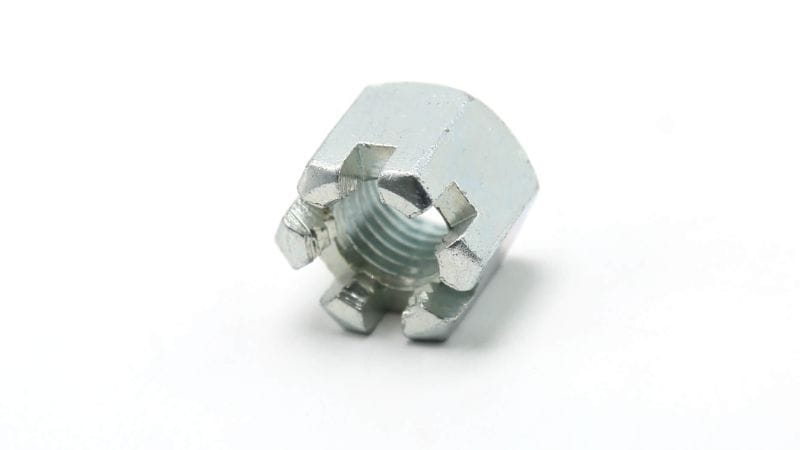
A castle nut ( also referred to as castellated nut)is a type of fastener shaped with slots or notches cut into one end, allowing a pin or wire to lock it in place and prevent it from turning or loosening. Castle nuts are important in situations where parts experience a lot of movement or vibration, like in automotive systems or machinery. They help keep wheels, bearings, and other parts safe and secure by stopping the nut from coming loose over time.
Understanding how they work and where they are used can help anyone working with mechanical equipment or building projects where safety and reliability are necessary.
Definition and Purpose of a Castle Nut
A castle nut is a special type of locking nut used to keep important parts from loosening, especially where movement or vibration is common. It uses a simple but secure design that allows it to stay in place while also being easy to remove or replace if needed.
What Makes a Nut a ‘Castle’ Nut
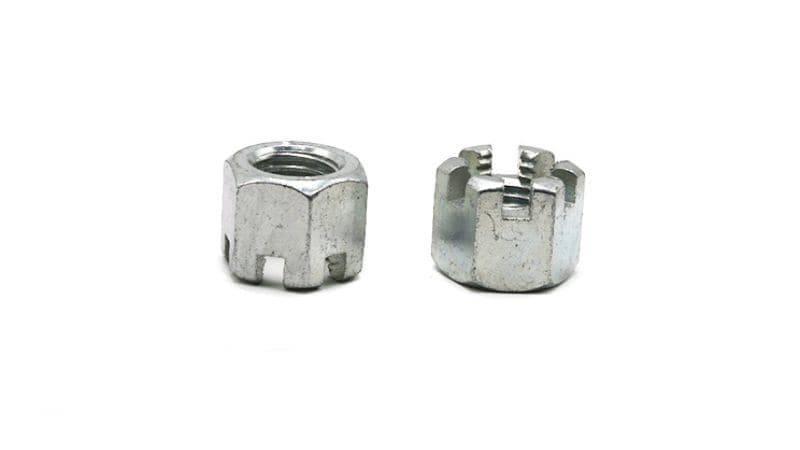
The castle nut gets its name from the notches or slots cut into one end. These slots look like the battlements found on the top of a castle tower. This unique design allows a pin, often a cotter pin, to pass through the nut and a hole in the bolt or stud.
The slots lock the nut in position after it is tightened. Unlike regular hex nuts, the castle nut’s structure is specifically built for situations where a secure hold is needed, but parts still must be taken apart for repair or service.
Castle nuts are commonly used in mechanical devices, vehicles, and machines. Their shape and slot arrangement make them easy to recognize even at a glance.

How a Castle Nut Works
A castle nut is threaded onto a bolt or shaft that has a hole drilled through its end. Once the nut is tightened to the desired level, a metal pin is inserted through the slots in the nut and the hole in the bolt. This locks the nut in place.
The most common pins used are cotter pins or split pins, but other types such as R-clips or locking wire can work too. This setup prevents the nut from turning or loosening, even if there is constant movement or vibration.
This locking method is simple and reliable. It is often used in places like wheel hubs, automotive suspensions, and aircraft components, where a loose nut could cause serious problems.
Materials Used
Castle nuts are usually made from steel because of its strength and resistance to wear. In high-risk environments, manufacturers may choose stainless steel for better corrosion resistance.
Brass and other metals can also be used for lighter or non-corrosive needs. Sometimes the nuts are coated with zinc, phosphate, or other coatings to further improve rust resistance and durability.
Material choice depends on the environment, needed strength, and whether weight is a concern. Aircraft parts, for example, may use lighter alloys, while construction uses tougher and heavier steel.
Manufacturing Standards
Castle nuts are made according to strict standards to ensure they fit well and hold securely. In the United States, common standards include ASTM, ASME, and MIL-spec. Internationally, ISO standards may also apply.
These standards control the size, thread type, material quality, and slot dimensions. For example, Unified inch coarse (UNC) or fine (UNF) threads are common sizes. Typical thread diameters range from 1/4 inch to 1-1/2 inch.
Proper manufacturing guarantees that the slots align properly with the bolt’s hole and that the material will not fail under repeated stress or vibration. Quality checks are an important part of the production process to ensure safety and reliability.
Castle Nut Installation and Removal
Installing and removing a castle nut takes care and the right approach. Using correct tools and following the right steps help maintain safety and secure fit.
Step-by-Step Installation Process
Start by placing the castle nut on the threaded end of the bolt or spindle. Hand-tighten the nut until it is snug against the part being fastened. Next, use a wrench to tighten the nut further. Align the slots on the nut with the hole in the bolt or shaft.
Insert a cotter pin through the slots of the nut and the hole in the bolt. This locks the nut in place and prevents it from turning. Bend the ends of the cotter pin around the nut to secure it.
For removal, straighten the cotter pin and pull it out using pliers. Unscrew the nut by hand or with a wrench. Clean and check the threads before reinstalling or replacing the nut to ensure a proper fit.
Proper Tools Required
A standard wrench or socket is usually needed to tighten or loosen a castle nut. For some applications, a castle nut wrench may fit better, especially if the nut is in a tight spot. Pliers are needed for installing or removing the cotter pin that keeps the nut secure.
Here’s a simple tool list:
| Tool | Purpose |
|---|---|
| Wrench/Socket | Tighten or loosen the castle nut |
| Castle Nut Wrench | Fits specific castle nut designs |
| Needle-nose Pliers | Insert and remove cotter pins |
Always use the correct size wrench to avoid damaging the nut or bolt. Well-fitted tools help prevent stripped threads and ensure the castle nut remains secure during use.
Common Applications for Castle Nuts
Castle nuts are used where a secure, vibration-resistant fastening is important. They are most often seen in vehicles, airplanes, and equipment that face high stress or movement.
Automotive Uses
In the automotive industry, castle nuts are most commonly found in critical safety components like suspension systems and steering parts. For example, they are used to fasten ball joints, tie rods, and axle assemblies. These areas of a vehicle experience repeated movement, strong forces, and constant vibrations.
A major benefit of using castle nuts in cars and trucks is that they can be locked in place with a cotter pin. This prevents them from loosening over time, which is especially important for steering and suspension. Castle nuts ensure components stay tightly fastened, even under tough road conditions.
Mechanics can easily see if the cotter pin is secure by inspecting the slot, making regular maintenance and safety checks simple. Due to their reliability, many manufacturers choose castle nuts for high-stress automotive parts.
Aerospace Applications
In aerospace engineering, safety and reliability are essential. Castle nuts play a critical part in assembling aircraft parts that must not come loose during operation. They are used for securing landing gear, control linkages, and engine mounts.
The locking system with a cotter pin offers an added layer of protection against loosening, even when planes experience extreme vibration, temperature shifts, and repeated stress cycles. This helps avoid accidents due to mechanical failure.
Castle nuts in the aerospace sector are usually made from high-strength materials like stainless steel, titanium, or specialty alloys. These materials resist corrosion and can withstand harsh conditions. Regular inspection of the nut and pin is common practice in aircraft maintenance, ensuring each fastener stays locked and safe over time.
Mechanical Assemblies
Castle nuts are widely used in machinery, agricultural equipment, construction vehicles, and industrial tools. Their main role is to fasten parts that face repetitive movement or where parts may shake loose due to vibration.
Applications include securing wheels on farm equipment, holding moving joints in heavy machines, and attaching parts in conveyor systems. The nut’s slots allow for easy installation of a cotter pin, which blocks any unwanted turning.
Castle nuts are available in various sizes and materials, making them suitable for different types of loads and working environments. Their design allows for quick visual checks and straightforward replacement when needed, helping operators maintain safe equipment with minimal downtime.
Frequently Asked Questions
Castle nuts are widely used in mechanical assemblies that need secure fastening, especially where movement or vibration is expected. When used with a cotter pin, they prevent loosening and provide a simple way to visually check if the fastener is secure.
What are the differences between a slotted nut and a castle nut?
A castle nut has slots cut into a rounded section at one end, giving it a castle-like appearance. These slots are designed for use with a cotter pin.
A slotted nut has straight slots cut into the top but does not have the rounded portion. Both types use cotter pins for locking, but the shape of the top is what sets them apart.
What role does a castle nut play in the assembly of an AR-15 rifle?
On an AR-15 rifle, the castle nut secures the buffer tube to the lower receiver. This is a critical connection, as it holds parts of the recoil system together.
It is important that the castle nut is properly tightened and locked in place, often with a staking method or a separate locking device, to ensure reliable firearm operation..