
For contractors and engineers, selecting the right fastening solution is critical to project integrity, timelines, and budget. Among expansion anchors, sleeve anchors remain a versatile choice for medium-duty applications in concrete, brick, and block. This guide will offer you a detailed account of the use cases, installation practices, and material selections that maximize performance on your job site.
What Is a Sleeve Anchor
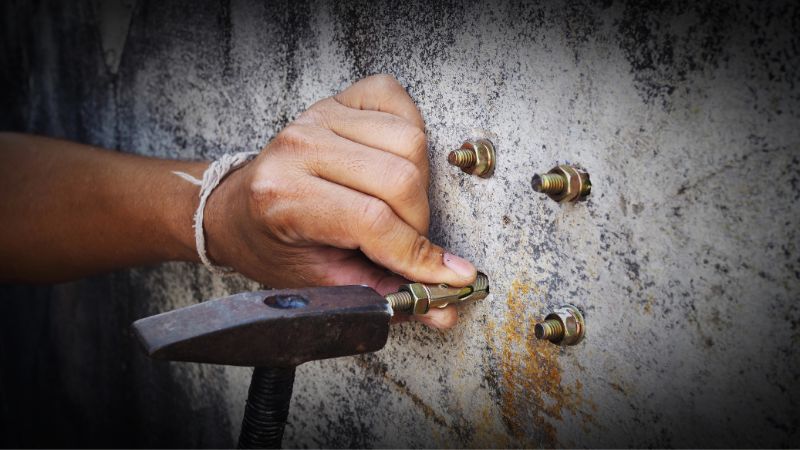
A sleeve anchor is a type of expansion anchor that provides a secure hold in solid base materials. It is commonly used to fasten items such as brackets, signs, shelves, or machinery to walls.
Unlike adhesive anchors, it relies on mechanical expansion rather than bonding agents. This makes it easier to install and remove when needed.
Sleeve anchors are preassembled and ready for immediate use, which helps reduce installation time. They are versatile and can handle various materials, including solid brick and poured concrete.
These anchors are often chosen for medium-load applications where a strong, removable anchor is preferred. Their performance depends on correct hole sizing, proper installation, and the strength of the base material.
How Sleeve Anchors Work
Key Components
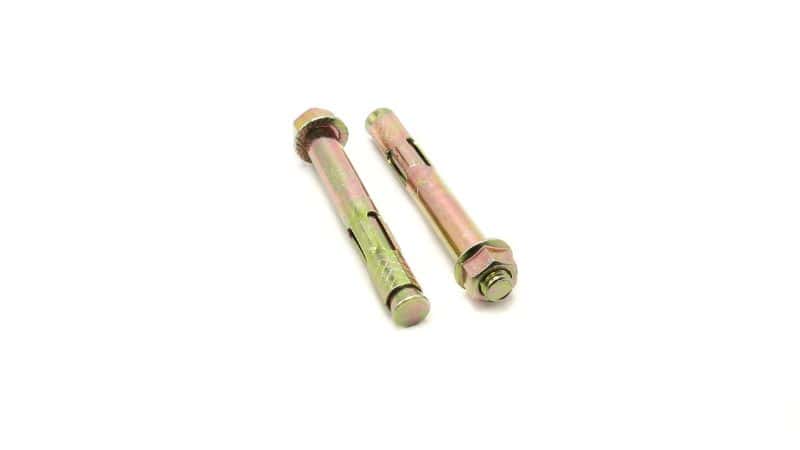
A standard sleeve anchor includes four main parts:
| Component | Function |
|---|---|
| Threaded Bolt or Screw | Provides tension and pulls the cone end into the sleeve. |
| Expansion Sleeve | Expands outward to grip the hole walls. |
| Washer | Distributes load evenly across the fixture surface. |
| Nut | Tightens the assembly and activates the expansion mechanism. |
The threaded bolt runs through the center and has a cone-shaped end that drives expansion.
The washer and nut at the top help control tightening and prevent surface damage. Each part must function correctly to ensure the anchor holds securely and resists pull-out forces.
Expansion Principle
A sleeve anchor functions as an expansion anchor, meaning it grips the base material by expanding inside a pre-drilled hole. The anchor includes a threaded stud, an outer sleeve, and a nut and washer.
When the nut is tightened, the stud pulls upward through the sleeve. This action forces a conical wedge at the bottom to push outward, expanding the sleeve against the walls of the hole. The friction and pressure create a secure mechanical lock.
Proper hole size and depth are critical. The hole must be the exact same diameter as the anchor body (e.g., a 3/8-inch anchor requires a 3/8-inch drill bit). This ‘tap-fit’ ensures the sleeve can expand properly to create maximum contact and pressure against the hole walls. The hole must also be clean of dust or debris to allow full expansion and prevent slippage.
This expansion principle allows the anchor to adapt to small variations in hole size and surface texture, making it effective in both concrete and brick installations.
Holding Power in Masonry
Sleeve anchors gain their holding strength through a combination of friction and compression within the masonry base material. As the sleeve expands, it distributes force along the sides of the hole instead of concentrating it at one point.
This even distribution minimizes the risk of cracking in concrete or brick while maintaining high load capacity. The anchor resists tension (pulling away from the surface) and shear (sideways) forces, which are common in wall-mounted or overhead applications.
The holding capacity depends on several factors:
- Anchor size and material (zinc-plated steel, stainless steel, etc.)
- Embedment depth (typically 1.5 times the anchor diameter)
- Base material strength (dense concrete provides higher resistance than soft brick)
When properly installed, concrete sleeve anchors can support loads from about 200 to 2,000 pounds, depending on size and conditions.
Comparison With Other Anchors
Compared with other expansion anchors, sleeve anchors offer greater versatility across different masonry materials. They perform well in concrete, brick, and block, while some anchors—like wedge anchors—are limited to solid concrete.
| Anchor Type | Best Use | Key Difference |
|---|---|---|
| Sleeve Anchor | Concrete, brick, block | Expands along full sleeve length |
| Wedge Anchor | Solid, high-strength materials like concrete | Expands at wedge end only |
| Drop-In Anchor | Overhead or flush installs | Requires setting tool |
| Plastic Anchor | Light-duty drywall use | Relies on friction, not expansion |
Sleeve anchors also allow removal by unscrewing the bolt, though the hole may need repair before reuse. Their balanced strength and adaptability make them a preferred choice for medium to heavy-duty fastening in varied masonry conditions.
How to Install Sleeve Anchors on Concrete
Types of Sleeve Anchors
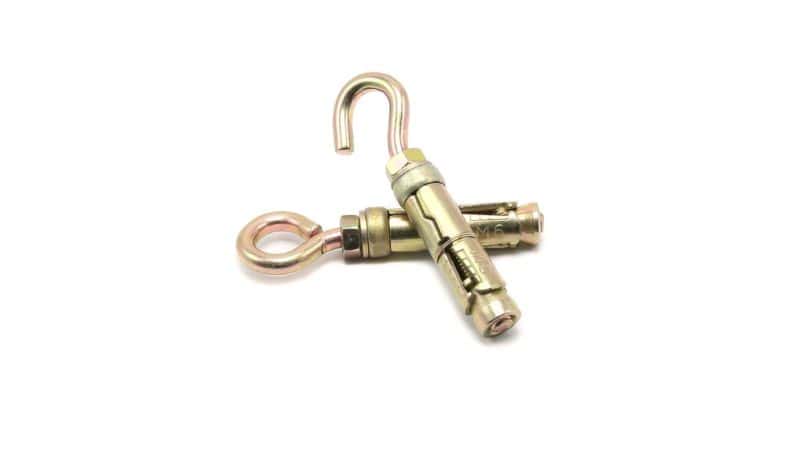
Head Styles
Manufacturers offer several head styles, including hex, flat, acorn, and round. Each style serves a different purpose and determines how the anchor sits on the surface.
- Hex head anchors allow easy tightening with a wrench and are common in heavy-duty applications.
- Flat head anchors sit flush with the surface, making them suitable for fixtures that need a smooth finish.
- Acorn head anchors have a decorative dome-shaped top and are often used where appearance matters.
- Round head anchors provide moderate holding power and are often used for lighter attachments.
The head style also affects the installation tool required and the anchor’s load distribution. For example, a hex head provides better torque control, while a flat head helps distribute force evenly across the surface.
Material Variations
Sleeve anchors are typically made from zinc-plated steel, stainless steel, or hot-dipped galvanized steel. The choice of material depends on the environment and required corrosion resistance.
- Zinc-plated steel anchors work well indoors where moisture is limited.
- Stainless steel anchors resist rust and are ideal for outdoor or marine use.
- Hot-dipped galvanized anchors provide a balance between cost and corrosion protection for outdoor settings.
Material choice directly affects strength, durability, and cost. Stainless steel anchors may cost more but offer a longer service life in harsh conditions.
Anchor diameter also varies by material and load capacity, typically ranging from 1/4 inch to 3/4 inch. Larger diameters provide higher pull-out and shear strength, which is important for securing heavy objects to concrete or masonry.
Load Capacity and Application Considerations
Determining Load Requirements
Load capacity defines how much weight or force an anchor can safely support. It depends on factors such as anchor diameter, embedment depth, and the compressive strength of the base material. For example, a 3/8-inch anchor embedded 1¼ inches in 2000 PSI concrete can hold over 1400 lbs in pull-out strength before applying safety factors.
Engineers typically apply a safety factor of 4:1, meaning only 25% of the ultimate load is used as the working load. This margin prevents failure from vibration, uneven loads, or installation errors.
When selecting an anchor, users should calculate the total applied load, including static and dynamic forces. The anchor’s rated shear and tension values must exceed these combined forces. Using multiple anchors can help distribute the load and reduce stress on each fastener.
Base Material Suitability
Sleeve anchors perform best in solid concrete, but they can also be used in brick and masonry block when the material is dense and uncracked. The anchor expands against the wall of the drilled hole, so weak or porous materials reduce holding strength.
The drilled hole should match the anchor’s diameter, and the embedment depth should meet the manufacturer’s minimum recommendation. For example, a ½-inch anchor generally needs at least 1½ inches of embedment for reliable holding power.
Avoid installing anchors near edges or close together. A spacing of at least 10 anchor diameters between anchors and 5 diameters from an unsupported edge helps maintain full load capacity.
Common Uses in Construction
Sleeve anchors are used for medium-duty fastening in construction and renovation projects. They secure items such as handrails, electrical boxes, brackets, pipe supports, and light structural framing to concrete or masonry.
Contractors choose sleeve anchors when versatility is needed because they work in multiple base materials. They are not intended for overhead or life-safety applications, where higher-capacity fasteners like wedge anchors or epoxy anchors are preferred.
Their ease of installation and reliable performance make them a standard choice for general-purpose anchoring in both commercial and residential settings.
Frequently Asked Questions
Can a sleeve anchor be removed and reused?
While the central bolt can be unscrewed and removed, the expansion sleeve is typically considered non-reusable. In some cases, the entire anchor (sleeve and bolt) can be removed by loosening the nut slightly and tapping it to retract the expansion mechanism. However, the original hole is often damaged or enlarged, typically requiring a larger anchor or a different fastening method for reinstallation.
Are sleeve anchors suitable for use in hollow base materials like cinder block or hollow brick?
Such practice is generally not recommended. Sleeve anchors require a solid base material for the sleeve to expand against. In hollow materials, the sleeve may expand into the void without creating sufficient friction, leading to a weak or failed installation. For hollow masonry, specific anchors like toggle bolts or hollow-wall anchors are better.
When should I choose a wedge anchor over a sleeve anchor?
Choose a wedge anchor for the highest load capacity in solid concrete, especially for structural and overhead applications. Sleeve anchors, which expand along a greater length, are better suited for medium-duty loads and offer more versatility across different solid base materials like brick and block, where a wedge anchor’s concentrated stress might cause cracking.
 English
  French
  Spanish
  Portuguese (Portugal)
  Portuguese (Brazil)
  German
  Russian
  Italian
  Dutch
Dutch  Romanian
  Turkish
  Greek
Greek  Czech
Czech  Polish
  Japanese